
What does a ceiling stain mean?
A ceiling stain is a sign that water has reached the drywall from above, often through a roof, a plumbing line, or the attic. When that drywall stays damp, mold can grow on the paper facing, on the paint film, or on dust that has settled into the texture.
Stains come in several forms. A fresh leak often shows as a soft, darkened circle that may still feel cool or damp. Older leaks leave concentric tide-mark rings, because each wetting and drying cycle deposits minerals and dust at the edge. Black or gray spotting inside those rings usually indicates growth that has been feeding on the moisture for some time.
The surface is only the last layer. Water travels along framing, insulation, and wiring before it appears on the ceiling, which means the stain can be far from the point where the water entered. That is why a ceiling repair should start above the stain, not on the stain itself.
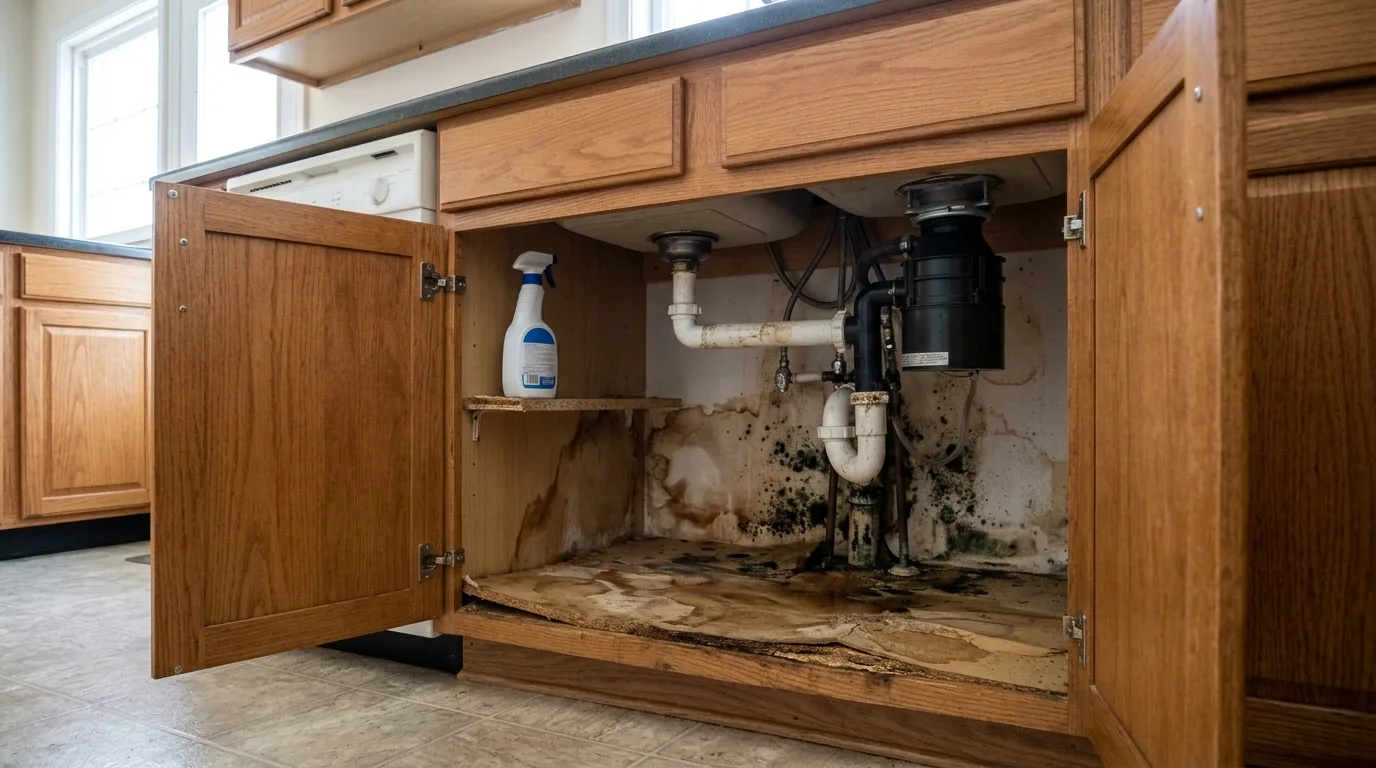
How ceiling remediation works
The job begins with a trace. The technician checks the attic or the floor above for the water path, including the roof deck, the flashing around chimneys and vents, plumbing penetrations, and any ductwork. Moisture readings are taken across the ceiling and the framing above it to define the area that is wet.
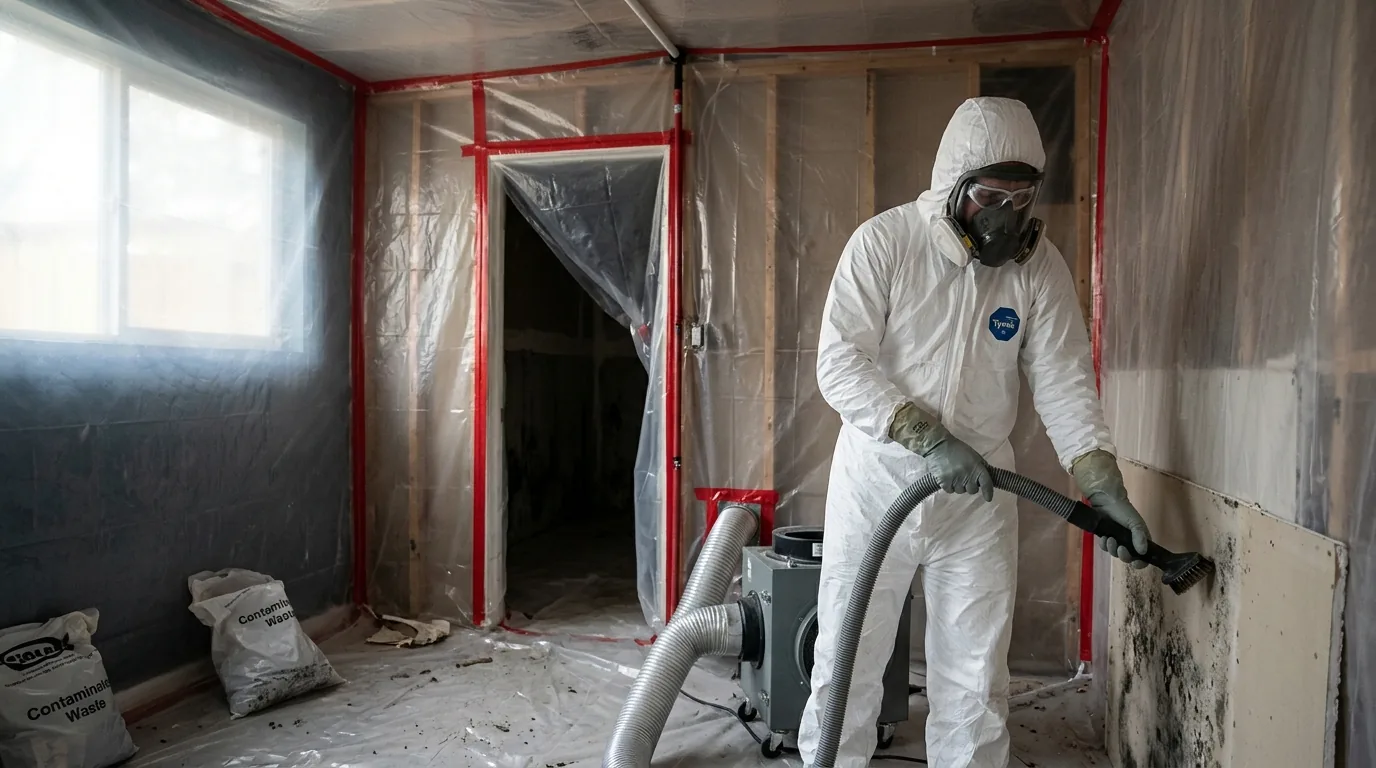
Containment for a ceiling is focused on the room below. Furniture and flooring are covered, the room is isolated with plastic sheeting, and a HEPA vacuum is used on the surface before cutting. Because drywall dust carries spores, crews wet the area as they cut and bag material as they go.
Removal targets drywall that is soft, sagging, or has grown mold on its paper facing. Ceiling drywall that is stained but firm and dry may sometimes be cleaned, primed, and repainted. Insulation directly above the damaged area is removed if it is matted or wet. Joists and sheathing are cleaned and dried, and any decayed wood is flagged for repair.
A new ceiling over an active leak will stain again. Ask who is repairing the roof, plumbing, or duct above, and whether the repair is confirmed before the ceiling is closed.
Drying and verification come last. Meters confirm the framing is dry before insulation and drywall go back in. Primer that blocks stains is applied before paint, so the old tide marks do not bleed through the new finish.
Eight warning signs on a ceiling
Ceiling problems often appear quietly, so it is worth checking for these signs during routine cleaning or after weather.
- Brown or yellow rings that grow after rain or snowmelt.
- Dark or fuzzy spots inside a stain, especially at the edges.
- Paint that bubbles, flakes, or lifts near a stain.
- Drywall that sags or feels soft when lightly pressed.
- Cracks along a seam or where the ceiling meets a wall.
- A musty smell under a specific spot on the ceiling.
- Light fixture or fan housing that is stained or wet.
- Stains that move or spread from one visit to the next.
A stain that changes shape over a few weeks suggests an active leak. Mark the edge with pencil and date it, so you can tell whether the problem is improving or getting worse.
What causes ceiling mold
Roof leaks are the most common source on a top-floor ceiling. Damaged shingles, failed flashing around vents and chimneys, and cracked pipe boots all let rain reach the sheathing and then the ceiling below. The leak is often intermittent, which is why the stain may only appear during heavy storms.
Plumbing is the second source. A supply line above the ceiling, a drain that has a slow seep at a joint, or a bathroom with a failed shower pan can all wet the drywall from above. Ceiling stains below bathrooms and laundry rooms deserve particular attention, because they are often caused by hidden plumbing rather than the roof.
Condensation is the third. Cold air ducts run through unheated spaces can sweat, and the moisture drips onto the ceiling. Warm, humid air from the room below can also condense on the cold underside of the drywall if the ceiling is poorly insulated or air-sealed. These causes produce a steady stain in the same place rather than a storm-driven one.
Ice dams add a seasonal cause. In winter, melting snow can refreeze at the eaves and push water under shingles. That water reaches the top plate and the ceiling along the outside wall, often in a line rather than a circle. Cold climates like Denver see this pattern more often in older homes with thin attic insulation.
Safe checks you can make first
Start with a safe look. Photograph the stain, mark its edge, and date it. Check whether the stain is larger after the last rain or whether it stays the same. If the stain is wet to the touch, turn off any light fixture or fan in the area and keep the switch off until an electrician or the technician confirms the fixture is dry.
From the attic, if you can access it safely, look up at the stain's location. Check for wet insulation, damp sheathing, and any drips on the rafters. Use a flashlight and walk only on framing. EPA guidance indicates that areas of about 10 square feet or less can often be handled by a homeowner once the water is stopped, but a ceiling that sags or has growth above it should go to a professional.
Do not paint over a stain without fixing the water, do not poke a bulging ceiling to let water out, and do not stand under a sagging section while it is wet.
Put a container under an active drip, and move valuables out of the room. A simple bucket and a towel can prevent more damage while you arrange a repair.
The pro visit, step by step
- Intake. You describe the stain's location, whether it changes after rain, and what is above the ceiling, such as a bathroom, a roof valley, or a duct.
- Trace. The technician inspects the attic or floor above, checks flashing and plumbing, and takes moisture readings across the wet area.
- Written scope. You receive the affected area, the drywall and insulation to remove, the water-path repair, and the finish plan as separate items.
- Containment. The room is covered and isolated, and the work area is cleaned with HEPA vacuuming.
- Removal and cleaning. Wet drywall and insulation are cut out and bagged. Joists and sheathing are cleaned and dried.
- Leak repair. The roof, plumbing, or duct issue is corrected, or referred to the right trade with the work confirmed.
- Rebuild and finish. New drywall is installed, taped, and primed, then painted to match the room.
Ask for the trace report and the final moisture readings in writing. They show where the water came from, which matters if a similar stain ever appears.
Cost factors for ceiling mold removal
We do not publish prices. Ceiling quotes depend on the size of the area, the finish type, and the repair above the stain.
| Factor | What it changes |
|---|---|
| Area size | A small stain takes less drywall and finishing than a full room ceiling. |
| Ceiling texture | Popcorn or heavy texture needs careful handling and blending during repair. |
| Source repair | Roof, plumbing, or duct repairs are separate trades and are priced on their own. |
| Insulation | Wet insulation above the ceiling adds removal and replacement work. |
| Finish match | Matching paint across a whole room can add time compared with a spot repair. |
When a ceiling problem is an emergency
Some ceiling conditions should not wait.
- Water is dripping through the ceiling during rain or from a plumbing line.
- A section of ceiling is sagging, bulging, or cracking.
- There is a light fixture, fan, or outlet that is wet or shows scorch marks.
- The stain is growing quickly, or water is pooling on the floor below.
- A household member with asthma or a breathing condition is having symptoms that are getting worse.
Turn off power to the affected circuits at the breaker if water is near fixtures. Place buckets under drips, and move people and pets out from under a sagging section. Call local emergency services if there is a risk of collapse or electrical hazard.
Ceiling mold questions
Can I paint over a ceiling stain?
Painting covers the stain for a while, but it does not fix the water. Growth can continue under the paint and bleed through again. Fix the source first, then prime and paint.
Is a brown ring always mold?
No. A brown ring is often a water stain with minerals left behind. Mold is a separate question, usually shown by fuzzy or dark spotting. Both signal water that needs to be stopped.
Should I cut out the stained drywall?
If the drywall is soft, sagging, or has growth on its paper, it should be removed. Firm, dry stained drywall may be cleanable, but the decision belongs to the inspection.
How do I know the leak has stopped?
Watch the stain edge over several weeks, especially after rain. A stable, dry stain is a good sign. A stain that grows after rain points to a leak still active.
Who should fix the roof or plumbing above?
A licensed roofer or plumber handles the source repair. Our team can confirm the water path, but the repair itself is a separate trade.
Will insurance cover ceiling damage?
Coverage depends on the policy and the cause. Sudden water events are often treated differently from slow leaks. Check with your insurer before work starts.