
What is black mold, and how do you know?
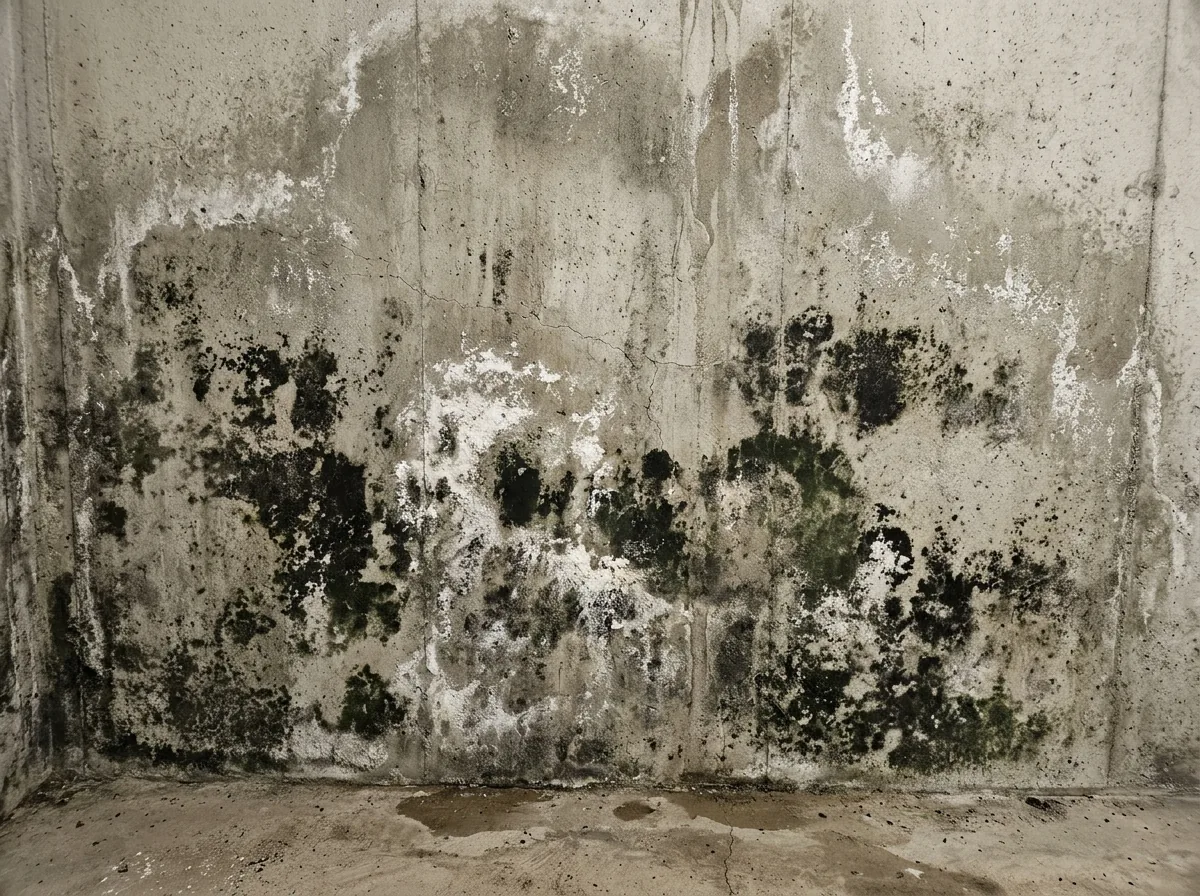
Black mold is a common name for dark, greenish-black growth that appears on wet building materials. The best-known species is Stachybotrys chartarum, which favors paper-faced drywall, cardboard, and other materials high in cellulose. It grows slowly and only when the material stays wet for an extended period.
Color alone is not a reliable identifier. Many molds look dark, including species that appear on kitchen grout and window sills. A lab test can identify the type, but the test does not change the plan: if growth sits on damp drywall or wood, the material usually needs to come out regardless of its exact species. The practical question is how wet the material got and for how long.
Black growth often shows up on the back side of drywall or behind wallpaper, so the surface you see may be only part of the problem. When you find dark patches on a wall that has had a leak or condensation, treat the whole area as suspect until a moisture reading says otherwise.
How black mold removal works
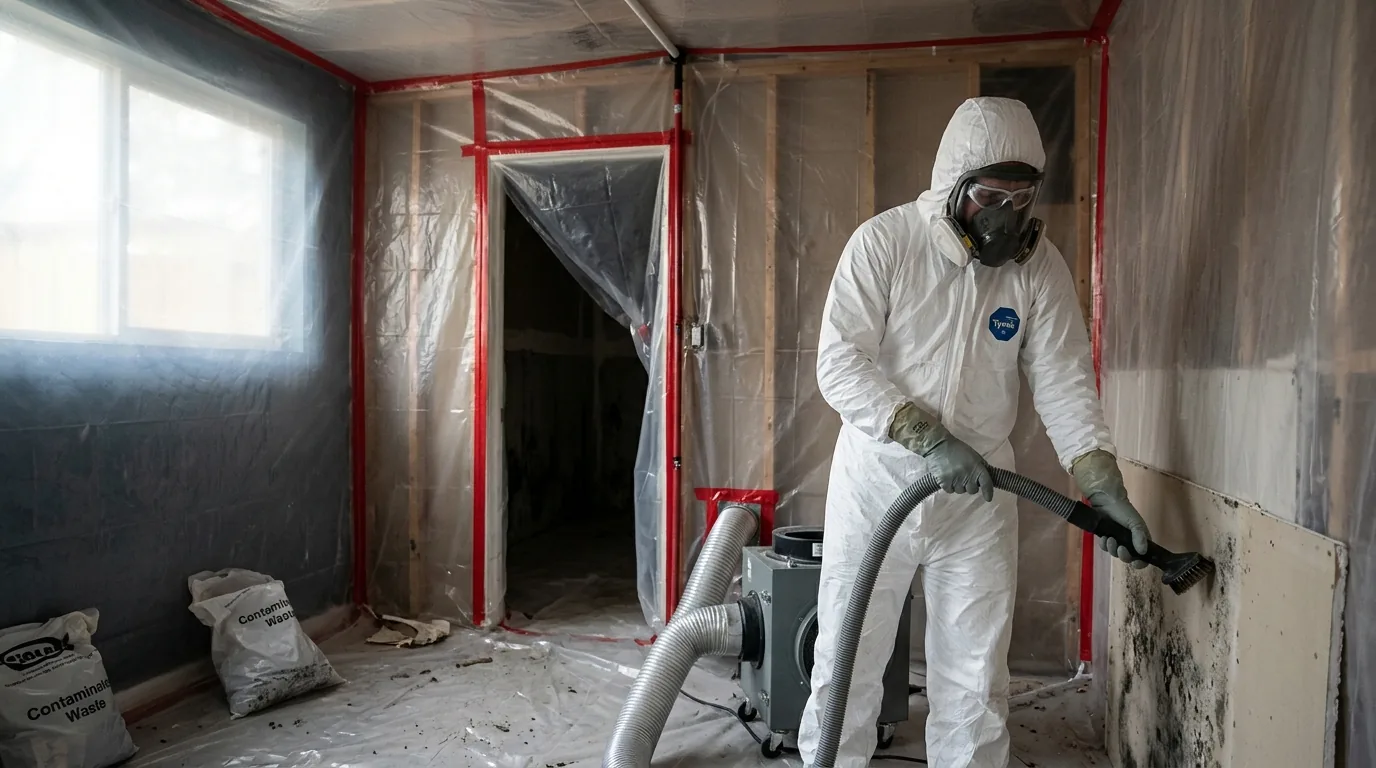
A proper job begins with containment. The affected area is sealed with plastic sheeting and tape, and air is managed so spores do not drift into clean rooms. Many remediation crews use a negative-air machine fitted with a HEPA filter to keep the work zone at lower pressure than the rest of the house. Workers wear protective gear, and the work area is cleaned as the job progresses rather than only at the end.
Next, the contaminated material is removed. Porous materials that stayed wet, such as drywall, insulation, carpet pad, and ceiling tile, usually cannot be cleaned to a safe condition and are cut out, bagged, and taken away. Solid framing such as studs and joists is typically cleaned with HEPA vacuuming and a damp wipe, then dried. Cleaning chemicals are a supporting step, not a replacement for removal.
The last steps are drying and verification. Moisture meters confirm that wood and remaining materials are back to normal readings before anything is closed up. Some projects include a clearance test after the work, which compares indoor air or surface samples to outdoor or pre-work baselines. The source of water is fixed as part of the job, not after it.
A good remediation crew can describe the containment setup, the materials they expect to remove, the drying targets, and how they will confirm the work before you pay.
Eight warning signs of black mold
Black mold rarely announces itself, but these signs together strongly suggest a moisture problem that needs attention.
- Dark, slimy or fuzzy patches on drywall, wood, or paper surfaces.
- A persistent musty smell that returns even after cleaning.
- Bubbling or peeling paint on a wall or ceiling with no obvious cause.
- Soft or crumbling drywall that gives under light pressure.
- Staining or water rings that grow after rain or use of the shower.
- Warped baseboards or flooring near an exterior or basement wall.
- Allergy-like symptoms at home that ease when you leave for a while.
- Condensation on windows or cold walls that stays wet through the day.
Symptoms such as coughing, wheezing, or eye irritation can have many causes. If someone in the home has asthma or a weakened immune system and symptoms are worsening, speak with a health professional and get the area inspected.
What causes black mold to grow
Black mold needs sustained moisture more than anything else. Materials that stay wet for days, not hours, are the ones it colonizes. Drywall that soaked up water from a leaking supply line, a slow roof leak behind a ceiling, or condensation on a cold exterior wall can all provide that condition. Once the material is wet, the growth can appear within days and become visible within weeks.
Ventilation problems add to the risk. A bathroom fan that vents into the attic instead of outside, a clothes dryer with a long vent run, or a kitchen without a working range hood can leave humid air trapped in the house. Cold surfaces attract that humidity, and the water collects where the temperature drops.
Groundwater is another common source, especially in basements and lower-level rooms. Soil that slopes toward the foundation, gutters that discharge near the wall, and window wells that flood can all keep a wall damp for long periods. Fixing the water path is what stops the next outbreak.
For a broader look at how moisture drives growth across the home, see our our Denver services overview on the homepage.
Safe checks before you call
You can do a few things safely on your own before a professional arrives. Start by finding and stopping the water source if it is still active. Turn off a leaking supply line, clear a clogged drain, or move items away from a wet wall. Do not wait for the growth to dry out by itself, because the moisture is what keeps it alive.
Next, measure the area. EPA guidance indicates that areas of about 10 square feet or less can often be handled by a homeowner once the moisture is fixed, using gloves, goggles, and an N95 respirator. Larger patches, growth inside walls, mold in the HVAC system, and any growth linked to sewage or floodwater should go to a professional.
Do not use a standard household fan to dry the area, do not scrub dry growth with a brush, and do not run a shop vacuum without a HEPA filter. All three spread spores into the air.
Photograph the area with dates before you touch anything. Keep notes about when you first noticed the smell or staining. That record helps a technician find the moisture source and helps your insurer understand the timeline if you file a claim.
What the pro visit looks like, step by step
- Intake call. You describe the location, the smell, the staining, and any recent leak. The technician asks about occupants with respiratory conditions and the age of the home.
- Inspection. The technician checks visible growth, tests suspect materials with a moisture meter, and looks for the water path. Many inspections include photos of each area.
- Written scope. You receive a list of affected areas, the materials to be removed, the containment plan, and the moisture fix. Ask questions before signing anything.
- Containment. The work zone is sealed. Air handling is adjusted to keep spores contained, and you are told which rooms to avoid.
- Removal and cleaning. Porous materials are removed and bagged. Structural surfaces are HEPA-vacuumed, cleaned, and dried.
- Drying and verification. Meters confirm dry readings. If the scope includes a clearance test, samples are collected and compared to baselines.
- Moisture repair and rebuild. The leak or ventilation issue is corrected, then walls and finishes are rebuilt or repaired.
Ask for the test results and the final moisture readings in writing. Keep them with your home records.
What affects the cost of black mold removal
We do not publish prices, because every home is different. We base quotes on the factors below.
| Factor | What it changes |
|---|---|
| Area and depth | Larger or deeper growth means more material removal and more containment time. |
| Material type | Drywall, insulation, and carpet usually need removal, which adds rebuild work. |
| Water source | A plumbing, roof, or foundation repair is separate from mold work and affects the total. |
| Access | Crawl spaces, attics, and tight wall cavities take longer to work in safely. |
| Verification | Clearance testing and additional drying checks add time and reporting. |
When black mold is an emergency
Treat these situations as urgent. Call us as soon as you can, and stop the water source immediately if it is still running.
- Growth covers a large area or has spread across several rooms.
- Water came from a sewage backup or a flood, which raises contamination and disposal requirements.
- Growth is inside an HVAC system or on ducts that carry air through the home.
- Someone in the house has asthma, severe allergies, or a weakened immune system and symptoms are getting worse.
- A ceiling or wall is sagging, bulging, or wet to the touch, which can signal a structural problem.
If anyone has trouble breathing or a medical emergency, call local emergency services first.
Black mold removal questions
Is black mold always dangerous?
Not always, but the risk depends on the person and the amount of growth. Sensitive people, including those with asthma or allergies, may react to any mold. The safest approach is to remove the growth and fix the moisture, regardless of color.
Can I remove black mold with bleach?
Bleach can lighten staining on hard surfaces, but it does not reliably reach growth rooted in drywall or wood. Porous materials usually need removal.
How much does it cost?
Cost depends on area, depth, material, access, and the moisture fix. We do not publish prices. We give a written quote after inspection.
Will the black mold come back?
It can if the moisture source is not fixed. A thorough job includes the water repair and drying verification, which lowers the chance of return.
Do I need to test the mold first?
Testing can confirm growth and sometimes the species, but it is not required to start a safe removal. A moisture inspection is more important for planning the work.
Should I move out during removal?
For small, contained work many people stay home with the affected rooms sealed. For larger jobs or anyone with respiratory conditions, ask us about temporary relocation.