
What is attic mold, and where does it grow?
Attic mold is growth on the underside of roof sheathing, rafters, trusses, and the paper facing of insulation. It usually appears as dark or greenish patches on wood, sometimes with a white, powdery bloom on the surface of the boards.
The attic is a difficult space because it sits between two very different climates. Warm air rises from the living area through ceiling penetrations such as light fixtures, bath fans, and attic hatches. When that air reaches a cold roof deck, its moisture condenses on the wood. Over time the wood stays damp enough to support growth, even when the roof itself is sound.
Growth is often most concentrated on the north-facing slopes, around ridge vents, and near the eaves, where air movement is weakest. Because the wood is structural, the goal is to dry it and correct the airflow, not simply to hide the staining.
How attic remediation works
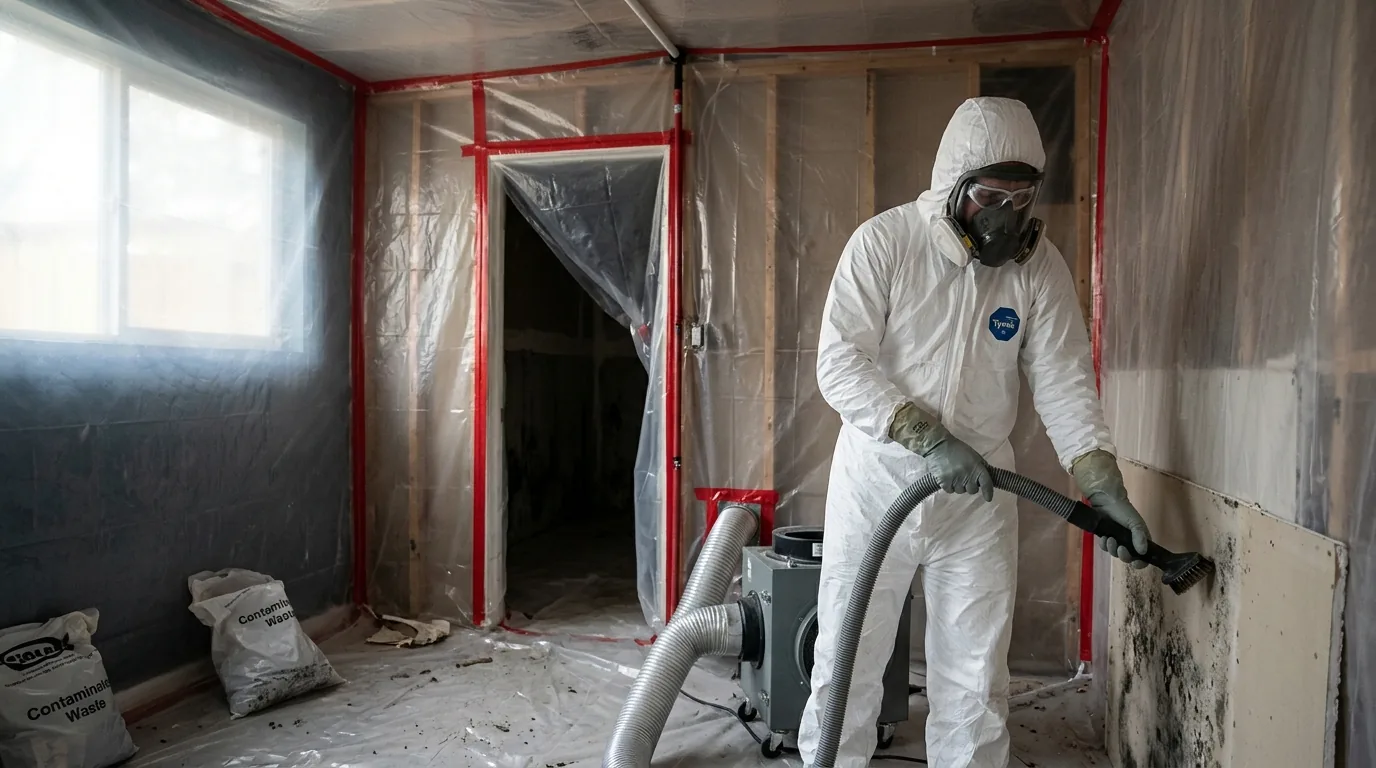
An attic job starts with a full survey. The technician checks the roof deck, rafters, the insulation surface, and the framing around every penetration. Moisture readings are taken on the wood, and a note is made of any staining, frost, or sagging insulation. Access is planned so the crew can reach the far corners without stepping on insulation or ceiling drywall.
Containment in an attic is different from a living space. Because the attic is open to the house through the ceiling, the work zone is usually isolated by sealing the hatch and any open ceiling penetrations with plastic. Crews wear full protective gear, and HEPA vacuuming is used throughout, since spores travel easily in a space with air moving through it.
Removal focuses on porous material that has stayed wet. Insulation that is matted, stained, or has a musty smell is usually removed and replaced, because it cannot be cleaned to a safe standard. Structural wood that shows surface growth is HEPA-vacuumed, cleaned, and dried. Wood with decay or deep penetration may be treated as a repair item, which a builder should assess.
A clean attic that is not ventilated will grow mold again. Ask how the technician will address intake and exhaust vents, insulation depth, and any bath or kitchen fans that vent into the space.
The job ends with drying and checks. Moisture meters confirm the wood is back to normal readings, and the airflow fixes are verified before the attic is closed up. If insulation is replaced, the new material should be installed according to the manufacturer's directions for the attic type.
Eight signs of attic mold
Attic problems are usually noticed from below first. These signs point toward an attic inspection.
- Dark spotting on roof boards visible when you look up through the hatch.
- Matted or stained insulation that feels damp or smells stale.
- Frost or water beads on nails and sheathing during cold weather.
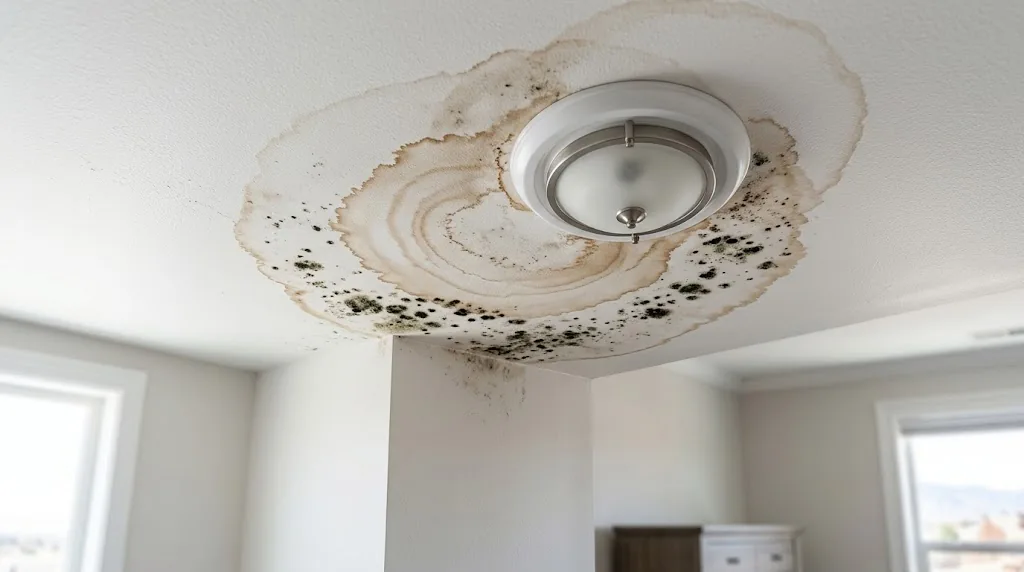
- Rings or staining on the ceiling below, especially near light fixtures.
- A musty smell in upstairs rooms, strongest near the ceiling.
- Ice dams or icicles along the eaves in winter.
- Bath fan exhaust that stays damp or vents into the attic.
- Sagging or discolored drywall on the top-floor ceiling.
Frost on the underside of the roof deck in winter is a strong signal. It means warm, moist air is reaching a cold surface and leaving moisture behind.
What causes attic mold to form
The main driver is warm, moist air entering the attic from below. Recessed light fixtures that are not air-sealed, gaps around plumbing stacks, and open chases let heated, humid air pass straight into the attic. Each bath or kitchen fan that vents into the space adds a steady stream of moisture.
Ventilation is the second factor. An attic needs balanced intake and exhaust so air keeps moving and carries humidity out. Blocked soffit vents, insulation pushed against the eave, and ridge vents that are painted over or obstructed all reduce airflow. Without movement, the roof deck stays cold and damp.
Roof leaks and ice dams are the third cause. A flashing failure or a missing shingle can soak the sheathing from above. In winter, snow melting on a warm roof can refreeze at the eaves and push water under shingles. Either path can wet the wood enough to support growth within days.
Denver's dry climate does not prevent this. Winters are cold enough for condensation to form on roof boards, and indoor humidity from showers and cooking can be high even when outdoor air is dry. For the broader picture of how moisture drives growth, our our Denver services overview on the homepage covers the main causes and detection methods.
Safe checks you can make before a visit
Start with the easy items. Check that bath and kitchen fans are actually venting outdoors and not into the attic. Look at the soffit and ridge vents from outside, and make sure they are not blocked by debris, paint, or insulation. Confirm that attic hatches and light fixtures seal properly. These checks cost little and often cut the moisture load quickly.
If you go into the attic, plan carefully. Wear a respirator, eye protection, and clothing that covers your skin. Walk only on framing, not on insulation or drywall. Keep the work short, and take photos with dates. EPA guidance indicates areas of about 10 square feet or less can often be handled by a homeowner once moisture is corrected, but attic growth is hard to contain, so most attic jobs go to a professional.
Do not run an attic fan that pulls air from the living space through the attic without checking the airflow first, and do not seal every gap in the ceiling without a ventilation plan. Both can make the moisture problem worse.
The pro visit, step by step
- Intake. You describe where you see staining or smell mold, whether ice dams have formed, and which rooms sit directly below the attic.
- Survey. The technician inspects the sheathing, rafters, insulation, vents, and penetrations, and records moisture readings and photos.
- Written scope. You receive a list of affected wood and insulation, the containment plan, and the ventilation and air-sealing fixes in separate line items.
- Containment. Hatches and open penetrations are sealed, and the work area is set up with HEPA filtration.
- Removal and cleaning. Insulation is removed and bagged, and wood is cleaned and dried.
- Airflow and sealing. Vents are cleared, fan ducts are rerouted if needed, and light fixtures and penetrations are sealed.
- Verification. Final readings are taken, and new insulation is installed to the correct depth.
Ask for the final readings and the ventilation details in writing. They are the reference you will need if the attic ever has a moisture issue again.
Cost factors for attic mold removal
We do not publish prices. Attic quotes depend on the access, the extent of the growth, and how much airflow work is needed.
| Factor | What it changes |
|---|---|
| Attic size and layout | Large or compartmented attics take more time to set up and survey. |
| Insulation condition | Replacing matted or stained insulation adds material and labor. |
| Wood damage | Surface cleaning is different from replacing decayed sheathing or framing. |
| Ventilation work | Adding vents, rerouting fans, or sealing penetrations is separate from mold removal. |
| Roof repair | A flashing or shingle leak needs roofing work, which is priced separately. |
When attic mold is an emergency
Some attic conditions call for prompt action, not a routine appointment.
- Water is actively dripping from the ceiling or light fixtures.
- Ceiling drywall is sagging, bulging, or has come loose.
- Wiring or light fixtures are wet, or you see scorch marks.
- Ice dams are causing water to enter the house during a storm.
- Someone in the home has asthma or breathing problems, and symptoms are worsening.
If water is entering near electrical equipment, turn off power at the breaker for that area and keep clear of the wet zone. Call local emergency services if there is any risk of collapse or electrical hazard.
Attic mold questions
Can I just add a fan to dry out the attic?
A fan can help only if the airflow path is designed correctly. A fan that pulls conditioned air through the attic can increase heat loss and moisture problems. A ventilation plan should come first.
Is attic mold the same as a roof leak?
Not always. Condensation from warm air causes many attic problems with no leak at all. A leak leaves a distinct water path and often shows staining along a line. An inspection can tell the difference.
Do I need to replace all the insulation?
Not always. Dry, clean insulation can often stay, but matted, stained, or musty insulation usually needs replacement. The technician should show you which areas are affected.
Will insulation hide the problem?
Adding insulation over damp wood can trap moisture against the sheathing. Growth continues out of sight. Dry the wood and fix the airflow before adding more insulation.
Are ice dams related to attic mold?
Often, yes. Heat escaping into a cold attic melts snow on the roof, and the melt refreezes at the eaves. The cycle can wet the sheathing and the insulation near the eaves.
How long does attic remediation take?
Timing depends on attic size, the amount of insulation replaced, and whether roof or ventilation work is included. We give you a schedule after the survey.