
What counts as basement mold?
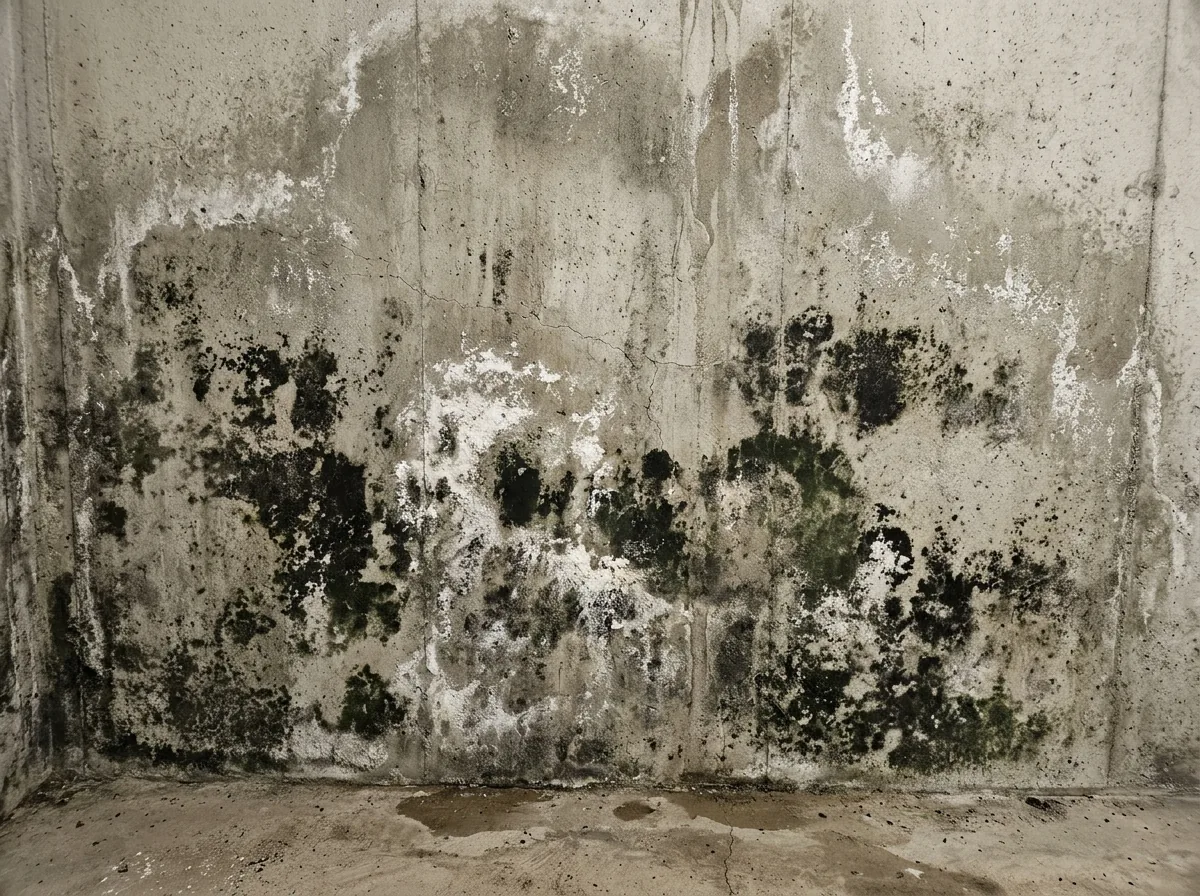
Basement mold is any mold growth on the walls, floor, joists, stored materials, or finishes in a below-grade space. It is most often found on the lower few feet of foundation walls, on the back of finished wall panels, and in corners where air does not circulate well.
Basements are a particular challenge because they sit partly in the ground. Soil stays cooler than the air above it, so warm, humid indoor air condenses on concrete and block walls. Water vapor also moves through concrete itself. Concrete is porous, so even a wall without visible leaks can hold enough moisture to support growth on any paper, wood, or fabric touching it.
Growth that appears on stored boxes, the back of a finished panel, or the sill plate is usually a sign that the space has been damp for a longer period than anyone realized. Treat it as a structural moisture issue first and a cosmetic issue second.
How basement remediation works
Remediation in a basement starts with mapping. The technician checks the full perimeter, the floor edges, the areas behind finished walls, and the space around the sump pit and any utility penetrations. Readings are taken on framing, drywall, and any masonry that shows staining, so the affected area is defined by measurement rather than by what is visible.
Containment comes next. Basements often connect to the rest of the house through a stairwell and a mechanical room, so the work zone usually needs a sealed barrier at the top of the stairs. Air is managed with a negative-pressure setup and HEPA filtration, which keeps spores from drifting up into living space during demolition.
Removal focuses on porous materials that have been wet. That usually means carpet and pad, paper-faced drywall, fiberboard, and cardboard storage. Studs, sill plates, and joists are cleaned with HEPA vacuuming and a damp wipe, then dried to a safe moisture level. Masonry is brushed and cleaned, and it is allowed to dry before anything is reattached.
A basement fix is only complete when the water path is addressed. Ask whether the plan includes grading, gutter extensions, sump maintenance, or a vapor barrier, and what each one would cost.
Drying and verification finish the job. Meters confirm framing is at normal moisture levels, and a dehumidifier sized for the space may run for a period after work. Some crews recommend a clearance check before the walls are closed, so the rebuilt space starts clean.
Eight signs your basement has a mold problem
Basement growth often hides behind finishes or in storage. These signs suggest the space needs an inspection.
- A musty odor that is strongest near the floor or in closed storage areas.
- White, powdery, or fuzzy patches on concrete, block, or the underside of joists.
- Bowed or buckled paneling on finished basement walls.
- Efflorescence, a white crust on masonry, which shows water moving through the wall.
- Damp carpet or a cold, sticky floor that stays damp after a dry spell.
- Condensation on pipes or the water heater that drips onto the floor.
- Stored items with spotting, such as boxes, shoes, or cardboard.
- A humidity reading above normal indoor levels on a basic hygrometer.
Efflorescence and a persistent musty odor are often the first clues that a wall is moving water. If you see either, a moisture check is more useful than a surface wipe.
What causes basement mold to return
Basement moisture usually has one of four sources. Hydrostatic pressure pushes groundwater through cracks and cold joints when soil around the foundation stays saturated. Surface water enters through window wells, low grading, or downspouts that discharge too close to the wall. Water vapor moves through porous masonry and condenses on cooler surfaces. Finally, humid indoor air in a space with little airflow raises the relative humidity until surfaces stay damp.
Each source calls for a different fix. Grading and gutter changes handle surface water. A sump system or exterior waterproofing addresses groundwater. Dehumidification and ventilation manage humidity. Vapor control, insulation choice, and air sealing help with condensation. Remediation that skips the source will almost always see growth come back in the same corner.
Safe checks you can make first
Start with what you can see and control. Check that gutters discharge at least several feet from the foundation, that soil slopes away from the house, and that window wells drain. Look at the sump pit, confirm the pump runs, and clean out any debris that might block the discharge line. These steps cost little and often reduce the water load on the walls.
Next, check humidity. A basic hygrometer placed in the basement can show whether indoor air stays above the level where mold tends to grow. Keep the space ventilated when weather allows, and run a dehumidifier if the readings stay high. Do not seal the room tightly while the moisture problem is active.
Measure any visible growth. EPA guidance indicates that areas of about 10 square feet or less can often be handled by a homeowner once the moisture is fixed, with gloves, goggles, and an N95 respirator. Basement growth that covers a larger area, sits inside a wall, or is linked to floodwater should go to a professional.
Do not pile stored items against the wall, do not use a fan that blows across the growth into the rest of the house, and do not paint over visible mold. Paint hides the problem and lets it spread behind the surface.
The pro visit, step by step
- Intake. You describe where you see growth, any past flooding, and how the room is used. The technician asks about the sump, the window wells, and the age of the foundation.
- Moisture inspection. The technician reads moisture levels on framing and masonry, checks the perimeter, and looks for efflorescence and staining that point to water movement.
- Written scope and drainage plan. You receive the affected areas, the materials to remove, the containment setup, and any recommended water-control work, listed separately.
- Containment. The stairwell is sealed, air pressure is set, and the work area is cleared of stored items.
- Removal and cleaning. Porous materials are cut out and bagged. Framing and masonry are cleaned, then left to dry.
- Verification. Final readings confirm dry framing. A clearance check may be included if you requested one.
- Water control and rebuild. Grading, gutters, sump work, or vapor control is completed, then walls and floors are rebuilt.
Keep the moisture readings and the drainage recommendations together with your home records. They are the best reference if the space ever needs work again.
Cost factors for basement remediation
We do not publish prices. Quotes depend on the size of the basement, how far the growth goes, and whether water control is needed.
| Factor | What it changes |
|---|---|
| Finished vs. unfinished space | Finished walls mean panel and drywall removal, plus rebuild work. |
| Growth on masonry or framing | Masonry needs cleaning and drying time. Framing may need replacement if rotted. |
| Water source | Grading, gutters, sump work, or waterproofing are separate trades and add to the total. |
| Stored items and contents | Moving and cleaning belongings adds labor and handling time. |
| Verification | Clearance testing and extended drying checks add time and reporting. |
When basement mold needs urgent attention
Some basement situations should not wait for a routine appointment.
- Water is still entering the space, including during a storm.
- Floodwater or sewage has reached the basement floor or walls.
- The sump has failed, or the pump is running continuously.
- Walls, columns, or floor framing feel soft, bow, or show new cracks.
- The basement is connected to living areas, and someone in the home has asthma or breathing problems.
For water entering the space, stop it first if you can. Move electrical equipment out of standing water, and do not enter a flooded area if power is still connected. Call local emergency services if there is any risk to safety.
Basement mold questions
Can a dehumidifier alone fix a basement mold problem?
A dehumidifier helps control humidity, but it does not remove growth or fix water entry. It works best as part of a full plan.
Is it safe to finish a basement that had mold?
It can be, once the moisture source is fixed, the framing is dry, and the work has been verified. Finishing over a damp wall usually leads to growth behind the new surface.
Does a sealant or waterproof paint stop mold?
Coatings can reduce water entry in some cases, but they do not replace moisture control. Coating over active growth can trap moisture and hide the problem.
How do I know if the problem is water entry or humidity?
Water entry often shows as staining, efflorescence, or wet spots after rain. Humidity problems show as damp surfaces and odor in dry weather, with no visible water path. A moisture inspection can usually tell them apart.
Should I move stored items out before the technician arrives?
Yes, if it is safe. Photograph items first, and do not carry them through the rest of the house. Let the technician advise on what to discard.
Will my insurance cover basement mold?
Coverage depends on the policy and the cause of the water. Sudden events are often treated differently from long-term seepage. Check with your insurer before work begins.